Tree Service vs DIY Jacksonville FL is a critical decision every homeowner faces when dealing with overgrown branches, storm damage, or dying trees. While the appeal of saving money by handling tree work yourself is strong, Jacksonville's subtropical climate, strict Duval County tree protection ordinances, and hidden liability risks make many jobs far more dangerous and expensive than they appear. Whether you're clearing a fallen limb after a summer storm or removing a mature oak threatening your roof, understanding when to hire a professional arborist versus when DIY is appropriate protects your property, your wallet, and your safety. Our locally owned tree service team has spent years helping Jacksonville, Riverside, San Marco, and Mandarin homeowners navigate these exact decisions — and we're here to give you the straight facts so you make the right choice.
When to Hire a Tree Service in Jacksonville vs DIY
Knowing when to hire a tree service in Jacksonville versus attempting DIY work is the most important decision you'll make. The line between safe homeowner maintenance and hazardous tree work is clearer than most people realize, and crossing it without proper training and equipment puts you at serious risk. Jacksonville's tree canopy — dominated by live oaks, Southern magnolias, and slash pines — creates unique challenges that require professional assessment in most removal or major pruning scenarios. If your tree meets any of the following conditions, calling a certified arborist isn't optional — it's the only responsible choice.
Height, Power Lines & Proximity to Structures — Know Your Limits
Any tree work above 15 feet or within 10 feet of power lines requires professional tree removal services, period. Jacksonville Electric Authority (JEA) regulations mandate minimum clearance distances from power lines, and violations result in fines starting at $500 plus liability for any service interruption you cause. Live oaks in older Jacksonville neighborhoods like Avondale and Ortega frequently grow within arm's reach of overhead lines — one wrong cut can send a limb into a transformer, causing injury, fire, or widespread outages. Proximity to structures adds another layer of risk: a 30-foot oak limb weighs 800-1,200 pounds, and if it falls toward your house instead of away, you're looking at roof damage, broken windows, and homeowner insurance claims that may be denied if they determine you were performing tree work without proper liability coverage.
- Trees taller than 15 feet require aerial lift equipment and fall zone calculation
- Power line work demands JEA clearance certification and insulated tools
- Structures within potential fall radius need rigging and controlled lowering
- Shallow sandy soil in Jacksonville makes root stability unpredictable during removal
If you're unsure whether your tree is too close to power lines or structures, call (904) 634-3474 for a free risk assessment. Our ISA certified team evaluates clearance distances and provides transparent pricing with no pressure to proceed.
Storm-Damaged Trees and Hidden Decay in Jacksonville's Climate
Storm-damaged trees are among the most dangerous DIY attempts we see after Jacksonville's hurricane season and summer thunderstorms. A tree that survived a storm with visible damage — split trunks, hanging limbs, or uprooted root balls — is under enormous internal tension and compression forces that are invisible to the untrained eye. What looks like a simple cleanup job can become a deadly "barber chair" scenario, where the trunk violently splits and kicks back as you cut, crushing anyone in the path. Jacksonville's high humidity and frequent rain also promote internal decay — a live oak can look healthy from the outside while the heartwood inside is completely rotted. Professional tree risk assessment uses resistograph drilling and visual inspection techniques to detect hidden decay before cutting begins.
- Hanging limbs (widowmakers) are under tension and release unpredictably when cut
- Leaning trees have compressed and tensioned wood that requires directional felling expertise
- Root damage from flooding or soil saturation makes trees unstable for weeks after storms
- Internal rot is common in Jacksonville oaks over 30 years old — invisible until failure
Don't gamble with storm damage. Our same-day storm damage response team is available throughout Jacksonville, Southside, and Northside to handle emergency removals safely and fast.
Disease Identification and Treatment — When Certification Matters
Disease identification and treatment separates amateur tree work from professional arborist services. Oak wilt, a fatal fungal disease spreading rapidly through North Florida, requires precise diagnosis and immediate containment — improper pruning during the wrong season (February-June) can spread the pathogen to neighboring trees through root grafts. Similarly, Southern pine beetle infestations, laurel wilt in redbay trees, and bacterial leaf scorch in live oaks all demand ISA certified expertise to diagnose correctly and treat effectively. DIY pruning without understanding disease transmission can turn one sick tree into a neighborhood-wide epidemic, costing you and your neighbors thousands in removal costs. Jacksonville's subtropical climate accelerates disease spread, making professional assessment essential for any tree showing discoloration, wilting, or unexplained branch dieback.
- Oak wilt spreads through pruning wounds and shared root systems — requires certified containment
- Improper cut angles and timing leave trees vulnerable to pathogen entry
- Disease treatment often requires soil injections and systemic pesticides only licensed applicators can use
- Certified arborists recognize early warning signs homeowners miss until it's too late
DIY Tree Care You Can Safely Do in Jacksonville
Not every tree task requires a professional — knowing what you can safely do yourself saves money and keeps your landscape healthy between service visits. Small branch pruning, mulching, watering, and minor maintenance are realistic DIY projects that don't expose you to serious injury risk or liability. The key is recognizing your skill and equipment limits before you start. If the job requires climbing above shoulder height, using a chainsaw overhead, or removing limbs thicker than your wrist, you've crossed into professional territory. But for routine care of young trees, shrubs, and low-hanging branches, Jacksonville homeowners with basic tools and common sense can handle maintenance safely and effectively.
Small Branch Pruning and Mulching — The Low-Risk DIY Work
Small branch pruning under 2 inches in diameter and below 10 feet in height is safe DIY work if you follow proper technique. Use clean, sharp bypass pruners or a pole saw for branches you can reach without a ladder, and always cut just outside the branch collar (the swollen area where the branch meets the trunk) to promote proper healing. Mulching around your trees is one of the most beneficial tasks you can do yourself — apply a 3-4 inch layer of hardwood mulch in a donut shape around the base, keeping it 6 inches away from the trunk to prevent rot. Jacksonville's sandy soil drains quickly, so mulch helps retain moisture during dry spells while suppressing weeds and moderating soil temperature swings. These low-risk tasks improve tree health without requiring specialized equipment or exposing you to fall hazards.
- Prune small branches during dormant season (late fall to early spring) for best results
- Remove dead, diseased, or crossing branches first — focus on tree structure
- Mulch replenishment twice yearly (spring and fall) keeps trees healthier between professional pruning
- Never "top" trees or make flush cuts against the trunk — both cause permanent damage
Watering, Feeding & Minor Maintenance Tasks
Watering, feeding, and minor maintenance tasks are entirely DIY-appropriate and essential for tree health in Jacksonville's climate. Newly planted trees need deep watering (10-15 gallons per week) for the first two years to establish strong root systems in our sandy soil. Mature trees benefit from slow-release fertilizer applied in early spring — look for formulations with micronutrients like iron and manganese, which Jacksonville soil often lacks. Minor maintenance includes removing suckers (small shoots growing from the base), clearing debris from around trunks, and monitoring for pest activity like bagworms or scale insects. These tasks require no special tools beyond a garden hose, granular fertilizer spreader, and hand pruners — and they make a measurable difference in tree vigor and storm resistance.
- Water young trees deeply and infrequently rather than shallow daily watering
- Apply fertilizer in a circle extending to the tree's drip line (outer edge of canopy)
- Remove suckers promptly — they drain energy from the main canopy
- Check for fungal growth, boring insect holes, or unusual bark splitting monthly
When to Stop: Know Your Skill and Equipment Limits
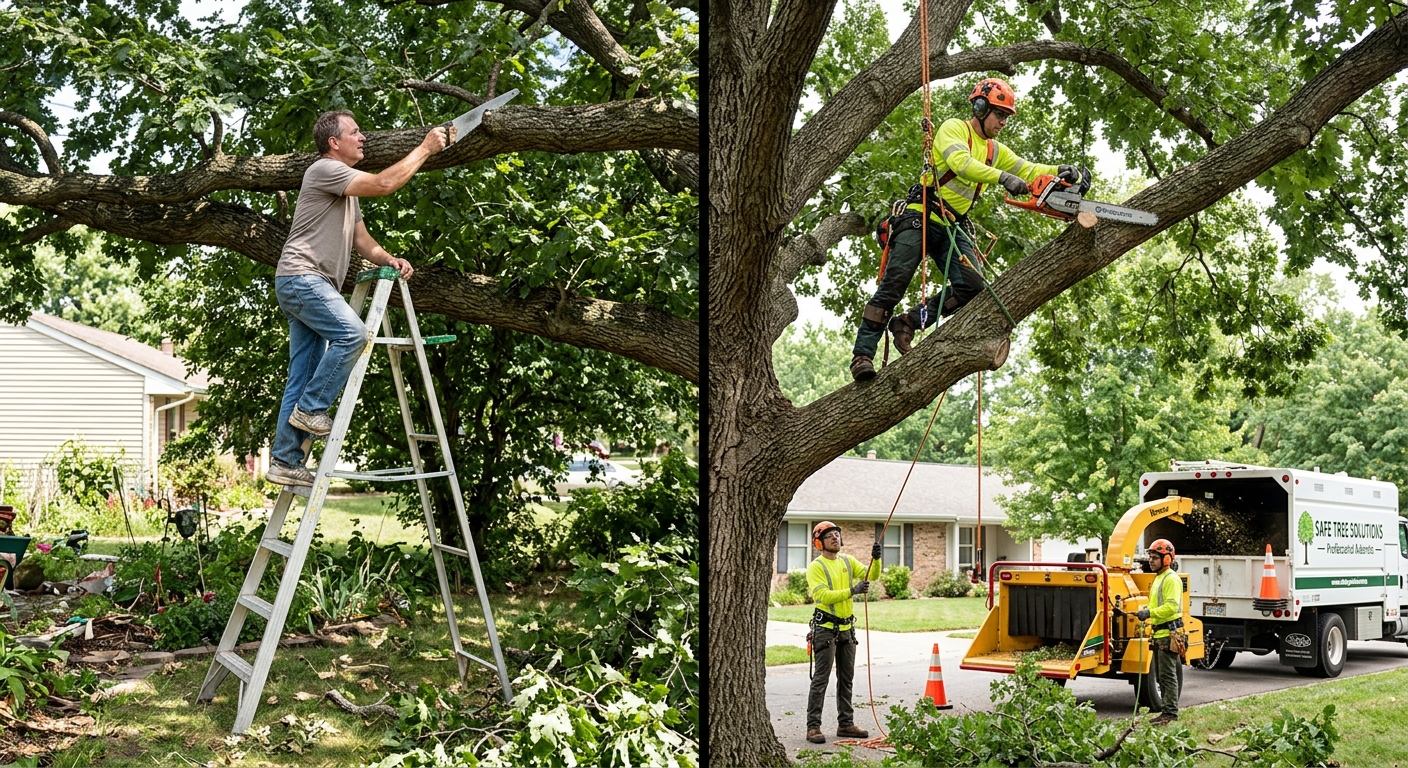
Knowing when to stop is the most important DIY tree care skill you can develop. If you're considering renting a chainsaw, climbing a ladder above 8 feet, or attempting to remove a tree section by section, stop immediately and call a professional tree service. Chainsaw safety requires training most homeowners don't have — kickback injuries send 28,000 people to emergency rooms annually, and fatigue from overhead cutting dramatically increases accident risk. Aerial lift operation demands certification for a reason — falls from height account for 75% of tree work fatalities, and most involve non-professionals attempting DIY removal. Your skill level might be high for carpentry or plumbing, but tree work introduces variables (wind, decay, tension forces) that even experienced DIYers can't predict without proper tree risk assessment training. The moment you feel uncertain, that's your signal to get professional help.
- Never use a chainsaw above shoulder height or while standing on a ladder
- Renting equipment doesn't include the training to use it safely
- Fatigue and heat (common in Jacksonville summers) drastically increase injury risk
- Professional arborists complete 60+ hours of safety training before working independently
Not sure where your project falls? Call (904) 634-3474 and describe the work. We'll tell you honestly if it's safe DIY or needs professional handling — no sales pressure, just straight answers.
Cost Comparison: Tree Service vs DIY in Jacksonville FL
Cost comparison between tree service and DIY in Jacksonville FL reveals that professional service is often cheaper than it appears once you factor in equipment rental, disposal fees, permit costs, and time value. The initial sticker shock of a $1,200 tree removal quote disappears when you calculate that renting a bucket truck, stump grinder, chainsaw, and wood chipper for a weekend totals $625-775 — and that's before you account for fuel, transportation fees, safety gear, and the very real possibility of needing medical attention or property damage repairs. Professional tree removal pricing includes liability insurance, proper equipment, trained crews, complete cleanup, and permit handling in one package. For small, low-risk jobs, DIY can save money. For anything requiring height access or heavy equipment, the math overwhelmingly favors hiring professionals.
Professional Tree Removal Pricing in Jacksonville (Small, Medium & Large Trees)
Professional tree removal pricing in Jacksonville breaks down by tree size, location complexity, and disposal requirements. Small trees under 20 feet cost $400-800 to remove, including stump grinding and debris hauling. Medium trees (20-40 feet) run $800-1,500, with pricing influenced by proximity to structures and power lines. Large trees over 40 feet — common with mature live oaks and pines throughout Jacksonville, Riverside, and Mandarin — cost $1,500-3,500 depending on crane access needs and whether the tree is dead or alive (dead trees are more dangerous to remove). Stump grinding adds $150-400 depending on diameter and root spread. These prices include complete cleanup, wood chipping, and hauling away all debris — something DIY attempts leave you responsible for. Disposal at Duval County landfills costs $45 per ton, and a medium oak generates 2-4 tons of wood and branches.
- Small tree removal (under 20 ft): $400-800 including stump grinding
- Medium tree removal (20-40 ft): $800-1,500 with cleanup and hauling
- Large tree removal (over 40 ft): $1,500-3,500 depending on access and hazards
- Emergency storm removal: 20-30% premium for same-day response
- Multi-tree discounts: 15-25% savings when removing 3+ trees in one visit
Equipment Rental and Tool Costs — The Hidden DIY Expense
Equipment rental and tool costs are where DIY tree work becomes surprisingly expensive. A bucket truck or aerial lift rents for $350-500 per day in Jacksonville, and inexperienced operators frequently need 2-3 days to complete what professionals finish in 4-6 hours. Stump grinders cost $200-300 per day, commercial chainsaws run $75-100, and wood chippers (required unless you want a massive brush pile in your yard) cost $150-200 daily. Add safety gear (hard hat, chaps, gloves, eye protection) at $150-200, plus fuel and transportation fees, and you're at $925-1,450 for a basic equipment package. That's before accounting for the learning curve — most first-time equipment renters waste hours figuring out operation, making costly mistakes, and discovering they need additional tools mid-project. Meanwhile, professional crews show up with everything needed and finish in a fraction of the time.
- Bucket truck rental: $350-500/day (2-3 day minimum for inexperienced users)
- Stump grinder rental: $200-300/day plus blade sharpening fees
- Commercial chainsaw rental: $75-100/day plus bar oil and fuel
- Wood chipper rental: $150-200/day (required for disposal or you pay dump fees)
- Safety equipment purchase: $150-200 (hard hat, chainsaw chaps, gloves, face shield)
Permit Fees and Disposal Costs: Budget Both Sides
Permit fees and disposal costs add unexpected hundreds to DIY tree projects in Jacksonville. Duval County requires tree removal permits for any tree over 12 inches diameter at breast height (DBH) on residential lots, with fees ranging from $50 for a single tree to $300 for multiple removals. The permit application process takes 7-14 business days and requires a site survey showing tree location, species, and reason for removal — most DIYers skip this step and risk fines up to $10,000 for unpermitted tree removal. Disposal costs are equally surprising: Jacksonville's yard waste collection won't take large limbs or logs, forcing you to rent a trailer ($75/day) and haul to a Duval County landfill where wood waste costs $45 per ton. A medium oak generates 2-4 tons of debris, meaning $90-180 in dump fees alone. Professional tree services include permit acquisition and debris removal in their pricing — no surprise costs or multiple trips to the landfill.
- Duval County tree removal permit: $50-300 depending on number and size of trees
- Permit application processing: 7-14 business days (delays your project start)
- Unpermitted removal fine: up to $10,000 plus mandatory replacement planting
- Landfill disposal: $45/ton plus trailer rental at $75/day
- Curbside pickup restrictions: Jacksonville won't collect logs over 4 inches diameter or limbs over 6 feet
Jacksonville Tree Regulations and Permit Requirements
Jacksonville tree regulations and permit requirements are stricter than most homeowners realize, and ignoring them creates legal and financial liability that far exceeds the cost of hiring a licensed tree service. Duval County's tree protection ordinance (Chapter 656) protects specimen trees, requires permits for most residential removals, and imposes mandatory replacement planting for removed protected trees. JEA power line clearance rules add another compliance layer — cutting trees near electrical infrastructure without authorization violates utility easement agreements and exposes you to penalties. Professional tree services navigate these regulations daily and include permit handling in their service. DIYers who skip the research face surprise code enforcement visits, stop-work orders, and fines that turn a money-saving project into a financial disaster.
Duval County Tree Protection Ordinance — What Requires a Permit
Frequently Asked Questions
How much does professional tree service cost in Jacksonville FL compared to DIY?
Professional tree service in Jacksonville typically ranges from $200 to $2,000 depending on tree size, complexity, and services needed. While DIY appears cheaper upfront, hidden costs like equipment rental ($150–$400 per day), disposal fees ($50–$200), and potential property damage can quickly exceed professional rates. Licensed tree services include liability insurance, proper equipment, and safe disposal. For trees over 15 feet or near structures, professional service proves more cost-effective and safer than DIY attempts in Jacksonville.
What are the main safety risks of DIY tree removal in Jacksonville?
DIY tree removal in Jacksonville poses serious risks including falls from heights, chainsaw injuries, electrocution from power lines, and falling limbs causing property damage or personal injury. Florida's unpredictable weather creates additional hazards with sudden wind gusts affecting tree fall direction. Without proper training, homeowners misjudge tree weight distribution and fall patterns. Professional tree services carry $1–$2 million liability insurance and use OSHA-approved safety protocols. Emergency room visits from DIY tree accidents in Jacksonville average $15,000–$45,000, far exceeding professional service costs.
Are tree service companies in Jacksonville licensed and insured?
Reputable tree service companies in Jacksonville must carry general liability insurance and workers' compensation coverage to operate legally in Florida. Licensed arborists hold ISA certification demonstrating expertise in tree biology, pruning standards, and safety protocols. Always verify a company's insurance certificates and license numbers before hiring. Florida law requires tree services to provide proof of coverage. Unlicensed operators may charge less but leave homeowners liable for injuries or property damage. Professional Jacksonville tree services maintain $1–$2 million liability policies protecting your property.
What equipment do I need for DIY tree work in Jacksonville versus hiring professionals?
DIY tree work requires chainsaws ($200–$600), pole saws ($100–$300), safety harnesses ($150–$400), helmets, eye protection, and often aerial lift rentals ($250–$400 daily). Professional tree services in Jacksonville arrive with specialized equipment including bucket trucks, stump grinders, wood chippers, rigging systems, and commercial-grade chainsaws. This equipment represents $100,000+ investments maintained by certified operators. For one-time tree projects, rental costs plus safety gear often match or exceed hiring professionals who complete work faster and dispose of debris properly.
How long does professional tree removal take compared to DIY in Jacksonville?
Professional tree services in Jacksonville typically complete tree removal in 2–6 hours depending on size and complexity, including cleanup and debris removal. DIY projects often span multiple weekends as homeowners lack proper equipment, experience, and physical conditioning for sustained tree work. Florida's heat and humidity create additional challenges for untrained individuals. Large tree removals requiring sectional cutting, rigging, and stump grinding can take DIYers 20–40 hours spread over weeks. Professionals work efficiently with trained crews, completing in one visit what takes homeowners considerable time and effort.
What is the difference between tree trimming and tree removal services in Jacksonville?
Tree trimming removes select branches to improve health, appearance, and safety while preserving the tree structure. This service costs $200–$800 in Jacksonville depending on tree size and accessibility. Tree removal eliminates the entire tree including stump grinding, typically ranging $500–$2,500 based on height and location. Trimming requires knowledge of proper cut locations to avoid disease and maintain structural integrity. Removal demands expertise in directional felling and rigging near structures. Both services need liability insurance and proper equipment that most Jacksonville homeowners lack for safe DIY execution.
Do Jacksonville tree service companies serve all areas including the Beaches and Southside?
Most established tree service companies in Jacksonville serve all major areas including Jacksonville Beach, Atlantic Beach, Neptune Beach, Southside, Mandarin, Arlington, and Westside neighborhoods. Service areas typically extend throughout Duval County and into neighboring St. Johns County communities. Response times vary by location with urban areas receiving same-day or next-day service while rural properties may require 2–3 day scheduling. Always confirm service availability for your specific Jacksonville address when requesting quotes, especially for emergency storm damage situations requiring immediate response throughout the greater Jacksonville metropolitan area.
Do professional tree services in Jacksonville offer warranties on their work?
Reputable Jacksonville tree service companies typically provide 30–90 day warranties on pruning work, guaranteeing proper healing and technique. Tree removal services warranty complete stump grinding below ground level and thorough cleanup. Health treatment warranties vary since tree response depends on multiple factors beyond company control. Written warranties should specify coverage details, exclusions, and claim procedures. Professional companies stand behind their work and address legitimate concerns promptly. DIY tree work carries no warranty protection, leaving homeowners responsible for mistakes, incomplete removal, or resulting property damage throughout Jacksonville.
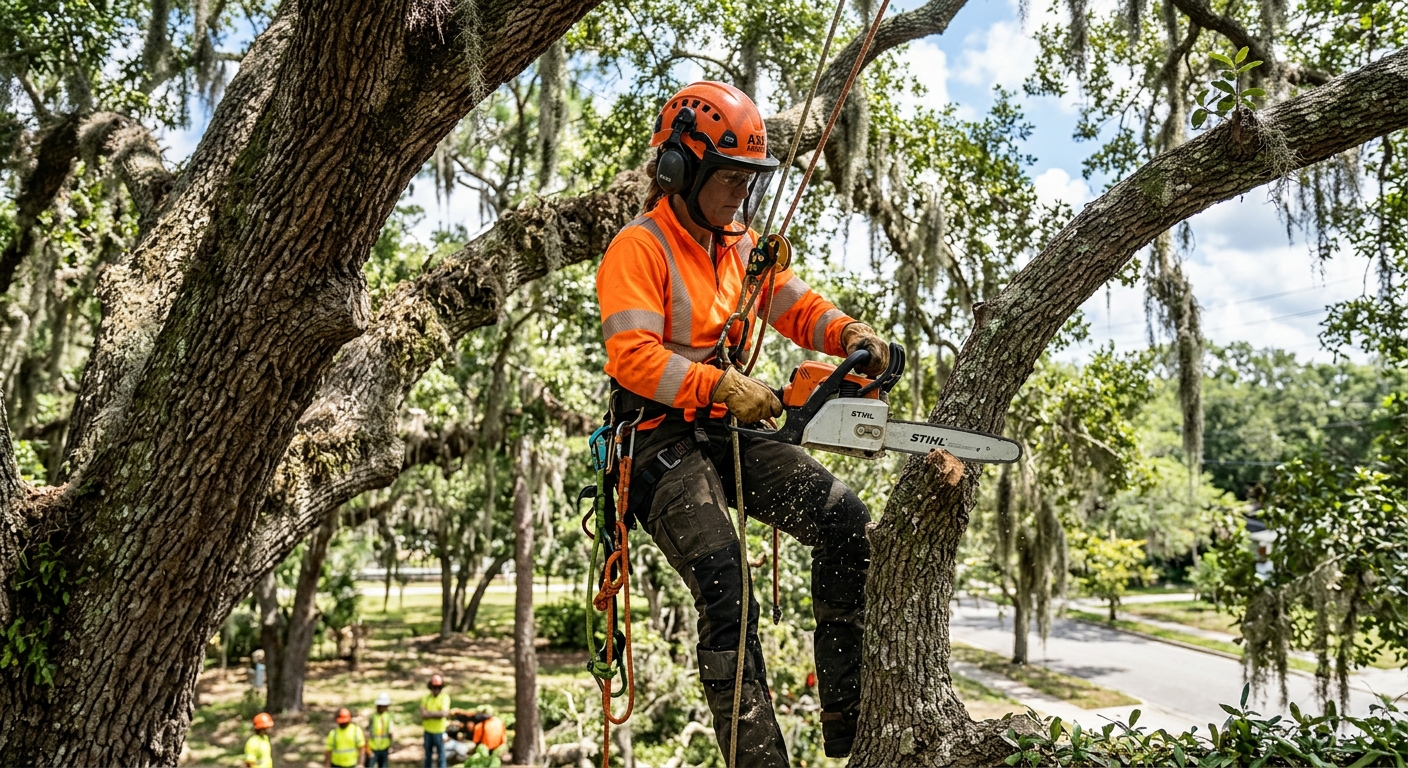
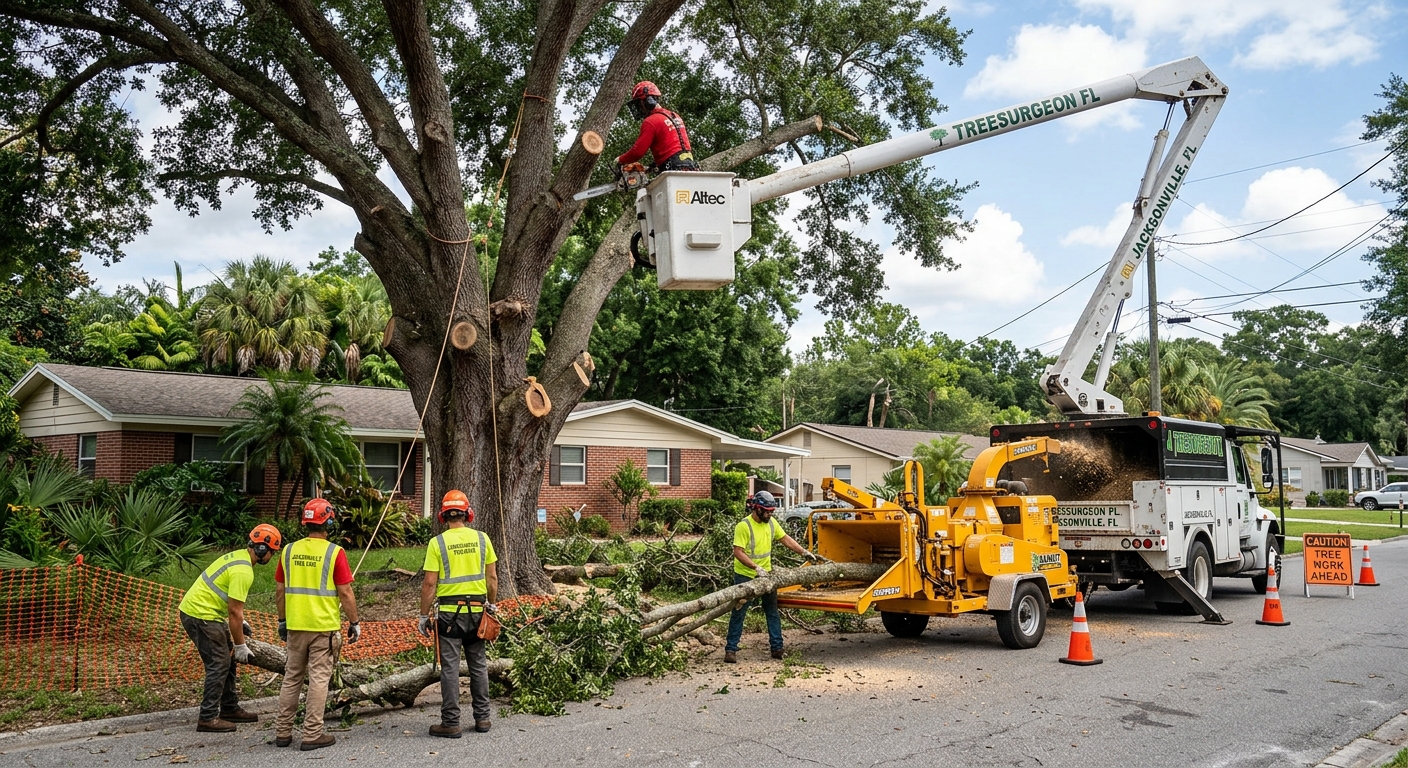
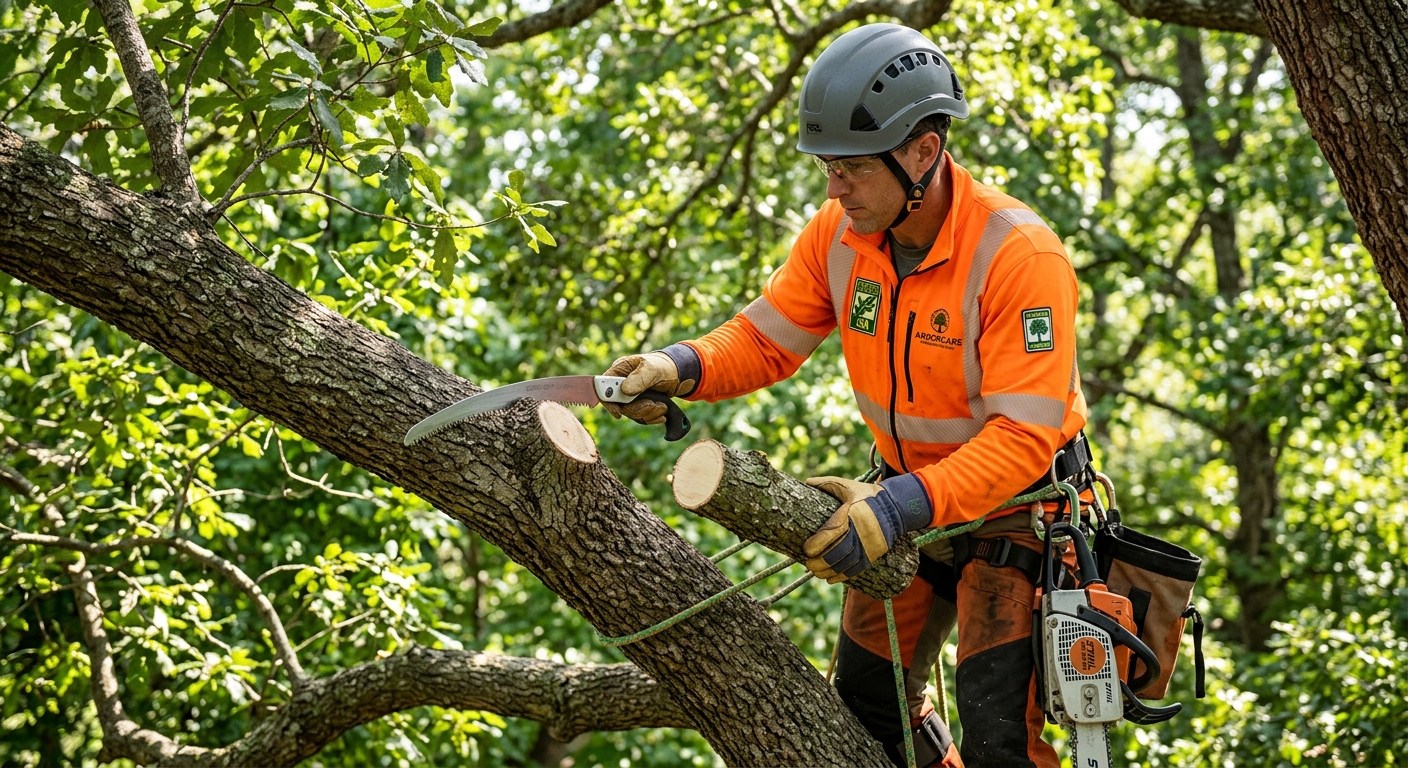
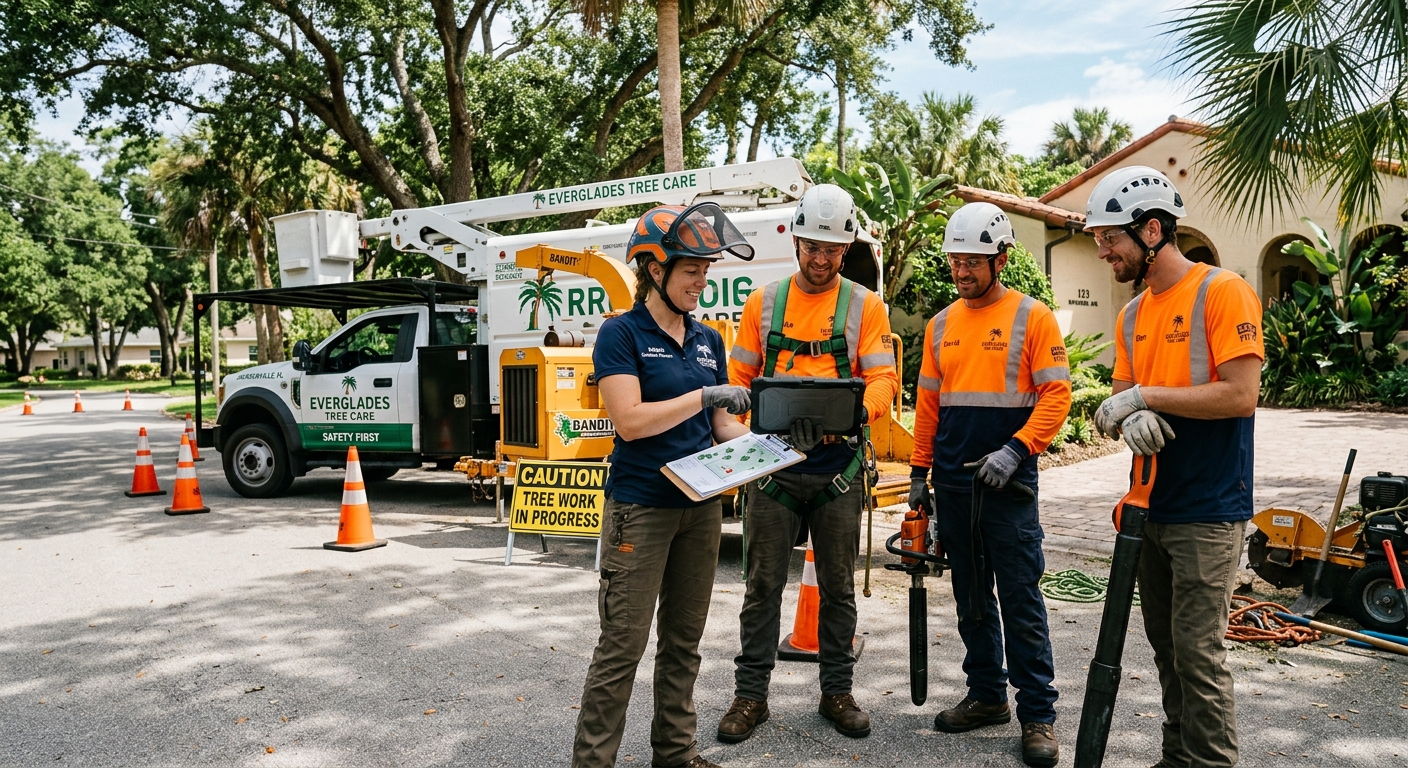
Professional Tree Service vs DIY
Frequently Asked Questions
How much does professional tree service cost in Jacksonville FL compared to DIY?
Professional tree service in Jacksonville typically ranges from $200 to $2,000 depending on tree size, complexity, and services needed. While DIY appears cheaper upfront, hidden costs like equipment rental ($150–$400 per day), disposal fees ($50–$200), and potential property damage can quickly exceed professional rates. Licensed tree services include liability insurance, proper equipment, and safe disposal. For trees over 15 feet or near structures, professional service proves more cost-effective and safer than DIY attempts in Jacksonville.
What are the main safety risks of DIY tree removal in Jacksonville?
DIY tree removal in Jacksonville poses serious risks including falls from heights, chainsaw injuries, electrocution from power lines, and falling limbs causing property damage or personal injury. Florida's unpredictable weather creates additional hazards with sudden wind gusts affecting tree fall direction. Without proper training, homeowners misjudge tree weight distribution and fall patterns. Professional tree services carry $1–$2 million liability insurance and use OSHA-approved safety protocols. Emergency room visits from DIY tree accidents in Jacksonville average $15,000–$45,000, far exceeding professional service costs.
Are tree service companies in Jacksonville licensed and insured?
Reputable tree service companies in Jacksonville must carry general liability insurance and workers' compensation coverage to operate legally in Florida. Licensed arborists hold ISA certification demonstrating expertise in tree biology, pruning standards, and safety protocols. Always verify a company's insurance certificates and license numbers before hiring. Florida law requires tree services to provide proof of coverage. Unlicensed operators may charge less but leave homeowners liable for injuries or property damage. Professional Jacksonville tree services maintain $1–$2 million liability policies protecting your property.
What equipment do I need for DIY tree work in Jacksonville versus hiring professionals?
DIY tree work requires chainsaws ($200–$600), pole saws ($100–$300), safety harnesses ($150–$400), helmets, eye protection, and often aerial lift rentals ($250–$400 daily). Professional tree services in Jacksonville arrive with specialized equipment including bucket trucks, stump grinders, wood chippers, rigging systems, and commercial-grade chainsaws. This equipment represents $100,000+ investments maintained by certified operators. For one-time tree projects, rental costs plus safety gear often match or exceed hiring professionals who complete work faster and dispose of debris properly.
How long does professional tree removal take compared to DIY in Jacksonville?
Professional tree services in Jacksonville typically complete tree removal in 2–6 hours depending on size and complexity, including cleanup and debris removal. DIY projects often span multiple weekends as homeowners lack proper equipment, experience, and physical conditioning for sustained tree work. Florida's heat and humidity create additional challenges for untrained individuals. Large tree removals requiring sectional cutting, rigging, and stump grinding can take DIYers 20–40 hours spread over weeks. Professionals work efficiently with trained crews, completing in one visit what takes homeowners considerable time and effort.
What is the difference between tree trimming and tree removal services in Jacksonville?
Tree trimming removes select branches to improve health, appearance, and safety while preserving the tree structure. This service costs $200–$800 in Jacksonville depending on tree size and accessibility. Tree removal eliminates the entire tree including stump grinding, typically ranging $500–$2,500 based on height and location. Trimming requires knowledge of proper cut locations to avoid disease and maintain structural integrity. Removal demands expertise in directional felling and rigging near structures. Both services need liability insurance and proper equipment that most Jacksonville homeowners lack for safe DIY execution.
Do Jacksonville tree service companies serve all areas including the Beaches and Southside?
Most established tree service companies in Jacksonville serve all major areas including Jacksonville Beach, Atlantic Beach, Neptune Beach, Southside, Mandarin, Arlington, and Westside neighborhoods. Service areas typically extend throughout Duval County and into neighboring St. Johns County communities. Response times vary by location with urban areas receiving same-day or next-day service while rural properties may require 2–3 day scheduling. Always confirm service availability for your specific Jacksonville address when requesting quotes, especially for emergency storm damage situations requiring immediate response throughout the greater Jacksonville metropolitan area.
Do professional tree services in Jacksonville offer warranties on their work?
Reputable Jacksonville tree service companies typically provide 30–90 day warranties on pruning work, guaranteeing proper healing and technique. Tree removal services warranty complete stump grinding below ground level and thorough cleanup. Health treatment warranties vary since tree response depends on multiple factors beyond company control. Written warranties should specify coverage details, exclusions, and claim procedures. Professional companies stand behind their work and address legitimate concerns promptly. DIY tree work carries no warranty protection, leaving homeowners responsible for mistakes, incomplete removal, or resulting property damage throughout Jacksonville.
Professional Tree Service vs DIY